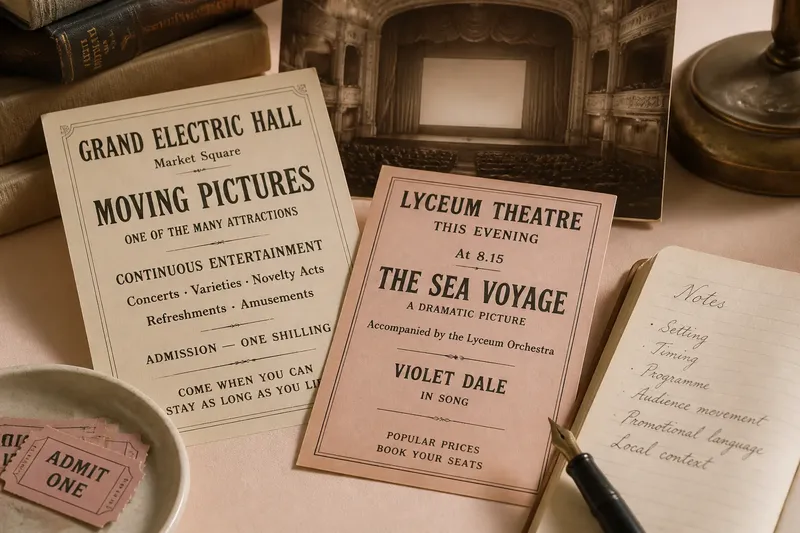
Ticket Stub or Printed Programme? Two Keepsakes, Two Jobs
Ticket stub or printed programme: see how admission evidence and event guidance preserve different details, and choose what to keep from a cinema visit.
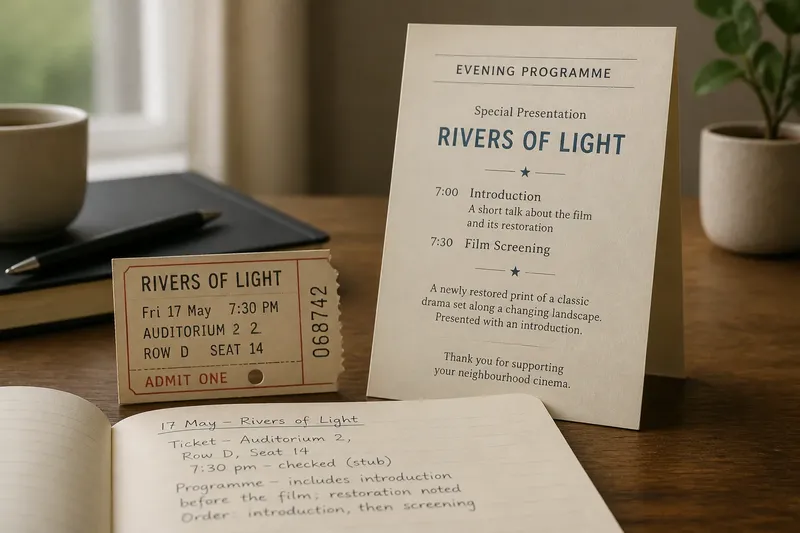
At the end of a cinema visit, a ticket stub and a printed programme can fit in the same coat pocket, but they answer different questions. The ticket stub or printed programme choice is not really a contest over which object matters more: one records entry, while the other explains the occasion surrounding the screening.
Imagine Mara, an invented visitor attending a special film presentation at a neighborhood cinema. Her ticket bears the film title, a seat assignment, and a printed admission mark; a programme at the entrance lists the evening’s schedule and a short note about the presentation. By the time she gets home, she wants to keep a useful record without turning a few paper items into an unexamined pile. Following what each object was made to do gives her a clear way to decide.
Two Different Purposes
A ticket belongs to the admission process. It can show that an audience member held a place or entered a particular performance. Depending on the cinema and the ticket format, it may carry a film title, date, time, auditorium, seat, price, or an indication that the ticket was checked. A torn stub or punch mark can also suggest that the ticket was used rather than merely collected in advance.
A programme serves the event. It may introduce the film, list a sequence of screenings or presentations, identify accompanying material, or explain a special feature of the occasion. Some programmes are brief handouts; others have room for an essay, a cast list, or notes about the cinema’s presentation. Their value lies in that context, not in proving who entered.
Think of the distinction as admission evidence versus event guidance. A ticket may identify a performance with very little explanation. A programme may explain the evening in detail while saying nothing about a particular visitor’s seat or attendance.
Keep the objects side by side before deciding what each one can tell you.
Mara’s Paper Trail
Mara arrives at the cinema with a ticket showing the film title and a reserved seat. At the entrance, an attendant checks it and returns the larger portion. The cinema also offers a folded programme that describes the screening and lists a brief introduction before the film. Mara takes one, reads it while waiting, and puts it in a separate pocket from her ticket.
After the screening, she notices that her ticket is now incomplete. The admission check has left her with a stub, and the printed seat information is still legible. That small piece carries a trace of the transaction: a particular performance was attended, and a place was assigned. It does not, however, tell her what the introduction covered or why the cinema presented the film in that format.
The programme fills some of those gaps. It names the presentation, outlines the sequence, and gives a short description of the accompanying material. It does not show that Mara attended. A person who picked up a spare programme or received one before the event could own the same sheet without having seen the film.
At home, Mara lays the two pieces on a table and writes down what she can identify while the evening is still clear in her mind. She does not add invented detail to make either object seem more complete. The ticket is useful for the performance and seat; the programme is useful for the advertised structure and context.
What Each Object Preserves
The ticket’s strongest information is often compact and specific. A printed time or auditorium can distinguish one performance from another. A seat number may show how the cinema organized admission, while a ticket class or section can indicate that access was arranged in different ways. If the ticket has been torn, stamped, or punched, its physical condition may also reflect how it was handled at entry.
Those clues have limits. A ticket can be printed before a performance and never used. A checked stub can show processing at an entrance without establishing every detail of what happened afterward. Handwritten notes may help identify a ticket, but a later annotation should not be mistaken for original printing.
A programme preserves a different layer: what the cinema chose to tell its audience. Its headings, running order, descriptions, and credits can clarify whether the screening was presented alone or as part of a larger occasion. The wording may also reveal which details the venue considered useful to explain, such as a musical accompaniment, an introduction, or a change in the usual schedule.
Programmes are not complete records either. A handout can describe what was planned rather than what took place. A last-minute alteration might have been announced orally or on a notice that was later discarded. The programme records the published plan, not necessarily the whole evening.
- Ticket: look for the film or event name, performance time, auditorium, seat, admission class, and signs of checking.
- Programme: look for the event title, order of activities, film details, explanatory notes, and any printed credits.
- Both: compare names and timings, and mark uncertain readings as uncertain rather than filling gaps from memory.
Reading the Pair
Together, the objects make a more useful record than either one alone, but they do not become interchangeable. The ticket anchors a visit to a particular admission arrangement. The programme anchors it to a particular description of the occasion. If both refer to the same performance, their overlap can help identify the event; their differences show what each was designed to preserve.
Say Mara finds that her ticket names the film and gives a late-evening time, while the programme lists an introduction before the screening. She places the two together in a paper sleeve and writes a brief note: the ticket identifies her seat and performance, and the programme outlines the advertised sequence. The expected result is a small record that distinguishes what she personally retained from what the cinema distributed to its audience.
That note matters because a programme may belong to a different performance of the same film, and a loose ticket may have lost its identifying context. Matching a title is a start, not proof that two items came from the same occasion. Compare any printed time, venue name, auditorium, and event wording; if the details do not align, keep the items separate or describe the connection as uncertain.
A simple folder system can preserve this distinction. Keep tickets together by venue or event, and place programmes with the occasion they describe. If a programme is too large to sit with its ticket, label the folder or use a note that identifies the relationship without attaching adhesive to the paper.
Which Should You Keep?
Choose by the question you want the object to answer. If you want evidence of a particular admission, retain the ticket or stub with its printed details intact. If you want a record of what the cinema presented and how it framed the occasion, the programme may be more informative. If space is limited, keep the item with details the other does not preserve.
When the visit has personal meaning, keeping both can be sensible. The ticket may carry the seat or performance information, while the programme supplies the explanation that makes those details understandable later. A short, dated note can connect them without asking the paper to carry memories it never recorded.
Handle fragile paper gently. Store it flat in a clean, dry place away from direct light, and avoid folding a ticket around a programme simply because they came from one visit. For particularly delicate or valuable material, consult a qualified paper conservator about suitable storage. Any care method should follow the item’s condition and the advice of an appropriate professional.
Questions About Keepsakes?
Does a ticket stub prove attendance?
A checked or torn stub can support the account that a ticket was used, especially when its performance details are legible. It cannot establish every part of the visit, so describe what the object shows rather than claiming more.
Can a programme identify a screening?
It can identify an advertised event through its title, schedule, venue, and descriptions. Compare those details with a ticket or another record before linking it to one specific performance.
What if the ticket and programme disagree?
Preserve the discrepancy instead of choosing whichever detail seems more convenient. The items may refer to separate performances, or one may reflect a change that the other does not record.
Should both items be stored together?
They can be kept in the same folder if the relationship is clear and neither item is forced or folded to fit. Add a separate note when needed, and leave the original printing untouched.
Keep Their Jobs Clear
Mara keeps both pieces, but she describes them differently in her folder: the stub records the admission details she retained, and the programme records the cinema’s account of the evening. That distinction stops a small collection from turning into a set of objects whose meanings depend on guesswork.
For any ticket stub or printed programme, start with the question each item can answer, then record the details actually present. The ticket is strongest as a trace of entry; the programme is strongest as a guide to the occasion. Keeping those jobs clear preserves not only the paper, but also the limits and usefulness of what it can tell you.